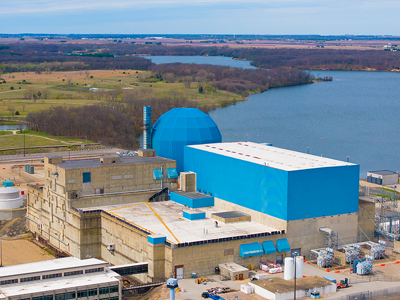
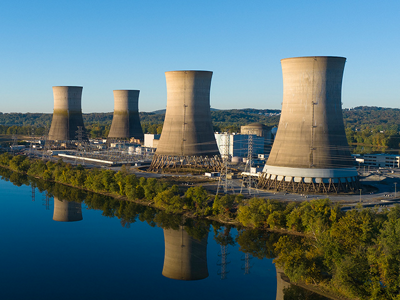
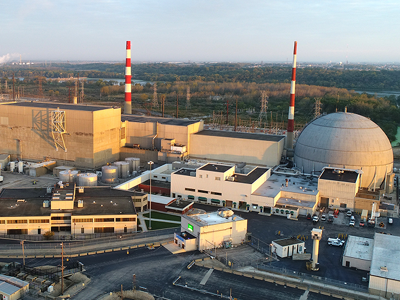
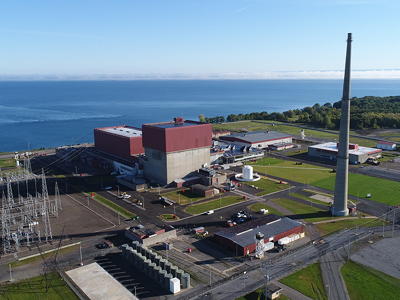
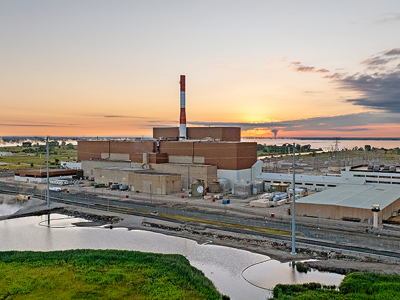
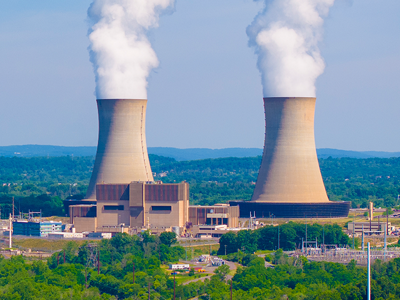
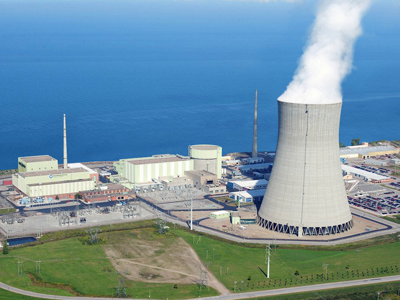
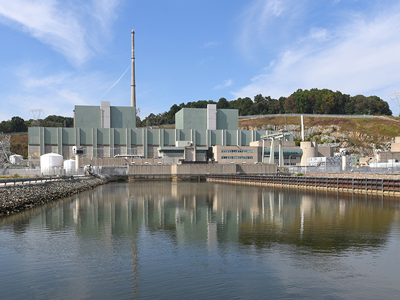
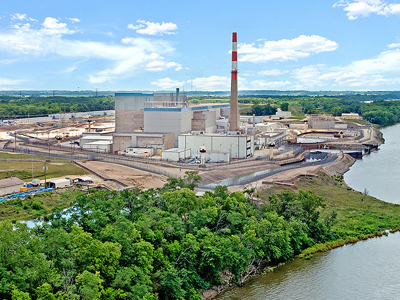
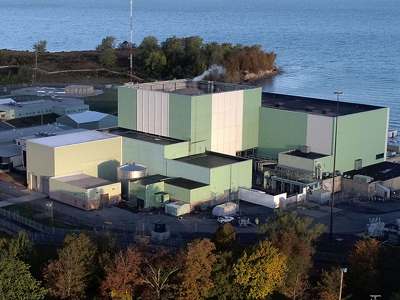
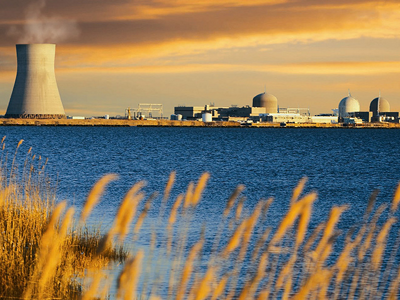
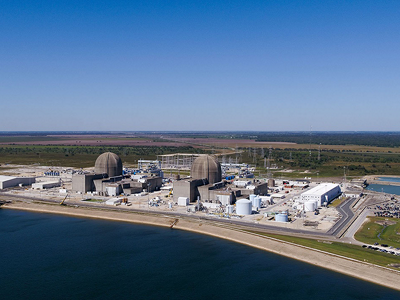
Nuclear cooling towers in front of sky at sunset

Nuclear Emergency Preparedness Information

Emergency Planning Preparedness


Special plans have already been developed to protect the public in the event of a nuclear incident in your area. These plans give specific attention to people who – like you – live, work or visit within 10 miles of a nuclear power plant. Procedures are in place to help protect you and other members of the public in the unlikely event of a nuclear emergency. If necessary, area officials would declare an emergency and take measures to ensure public safety. This site addresses procedures for all Constellation nuclear plants and their perspective surrounding areas (listed below). Please read and keep this material for future reference. Although it specifically addresses a potential nuclear incident, much of the information is useful in any major emergency.


Nuclear power plant licensees, including Constellation, are required by the federal government to provide emergency planning information to the public annually. Constellation provides emergency planning information to the public by mailing postcards to all homes and businesses within the 10-mile Emergency Planning Zone surrounding each nuclear plant. The postcard has this website address along with a number to request a printed brochure. This website is designed to provide emergency planning information in an interactive electronic format compatible with your smart phone or personal computer.

Monitor & Prepare
Tune your radio or TV to one of the stations listed in this site. Monitor the radio or TV for emergency information and follow emergency instructions. People should prepare for possible evacuation (e.g., reunite with family members, assemble emergency kits, provide for pet needs, keep off of the road as much as possible).

Keep Phone Lines Open
Please do not make unnecessary phone calls. Leaving phone lines open for emergency workers will help everyone involved. If you require assistance, call the phone numbers broadcast on the radio or TV. If you have a true emergency, call 911.

Shelter-in-Place or Evacuation
Officials might recommend that people either take shelter indoors or evacuate an area. It is critically important that you follow the recommended course of action. Staying home when instructed to evacuate or driving around when urged to stay indoors could expose you to danger unnecessarily.

NOTE: If you or someone you know might not respond to warning sirens or tv or radio broadcasts due to impaired hearing or other factors, please contact your County Emergency Management Agencies to register.

If Instructed to Shelter-in-Place
Go indoors and stay there. Close all doors and windows and shut off any systems that draw in outside air, such as furnaces, fireplaces and air conditioners. Keep listening to the radio or TV for updates. Keep pets inside and shelter farm animals. If traveling in a vehicle, close windows and vents.

If Instructed to Evacuate
In an evacuation, people in the affected area will be asked to go to local reception centers listed within this site. After this, they can stay at specified mass care centers or with friends or relatives outside the evacuation zone.

Please do not try to pick up children or others at schools, hospitals, nursing homes or overnight campgrounds. These facilities will be following their own special emergency plans, and you would most likely miss connections. If evacuated, students, hospital patients and nursing home residents will be accompanied to relocation centers where their needs will be addressed. To find out where people are being moved, stay tuned to the radio or TV.

Plan for at least three days away from home, locking up and turning appliances off as you would for a vacation. Pack all necessary items (See “Emergency Supplies”). Evacuate everyone in your home, following directions given on the radio or TV. These routes will have been selected as the safest ways out of the affected area.

Persons should only evacuate when instructed to do so. Evacuation of individuals not within the declared evacuation area could impede evacuation traffic flow. Monitor the radio or TV and prepare to follow instructions.

NOTE:
If time permits and if safe to do so, the public is encouraged to alert neighbors, by means other than the telephone, to ensure they heard and understand the warning signals and have transportation to reception centers.

Shadow Evacuation
Persons should only evacuate when instructed to do so. Evacuation of individuals not within the declared evacuation area could impede evacuation traffic flow. Monitor the radio or TV and prepare to follow instructions.

Staged Evacuation
You may be instructed to shelter-in-place until people in a higher risk area are evacuated. Monitor the radio or TV and prepare to follow instructions.
You never know when you might have to leave your home on short notice. A nuclear incident is only one possibility. Floods, fires, chemical spills or severe illness could occur at any time. Preparing now will help you respond more quickly in any emergency.

Emergency Kit
Keep an emergency kit – portable radio, flashlight, extra batteries, extra car keys, first aid kit and other items – in a special place that the whole family can easily locate. Write a list of the items you would want to take if you had to leave home quickly and post the list in a convenient spot. Be sure to keep a supply of all the items on your list. Gather any important documents that you might need in an emergency and keep them together in a safe place that you can access quickly and easily.

Transportation
Maintain your vehicle in good running order or go to your closest emergency bus pickup point to get to the identified reception center. If you will need transportation in an emergency, use the attached reply card to notify local authorities now. Please click below to complete and return the Access & Functional Needs reply card.

Pets
Only service animals will be permitted inside reception centers or shelters. Pets will not be allowed inside reception centers and shelters. Pet sheltering information will be available at the reception centers and shelters for your area. *Contact your respective County Emergency Management Agency for additional information.

Emergency Supplies:

  • General first aid kit and any special medication
  • Cash, credit, or ATM cards
  • Important documents
  • Change of clothing
  • Personal health products (toothbrush, eye care, sanitary products, etc.)
  • Baby formula, diapers, car seat, toys
  • Special dietary foods
  • Pet related supplies

    Additional emergency supply recommendations can be found at www.ready.gov

Download Checklist

A postcard has been mailed to your home containing instructions on how to access emergency preparedness information. This postcard contains a reply card to send to your local emergency management agency (EMA) if you require access/functional or transportation assistance in responding to an emergency. If you did not fill out and mail the reply card, but would require additional assistance during an emergency, please contact your county EMA to register.

For additional information on registration, please see site-specific emergency information for the applicable nuclear plant.

Benefits and Potential Risks of Nuclear Power
Used properly, nuclear fission (the “splitting” of uranium atoms) is a safe, dependable source of electricity. It is reasonable, though, to be concerned about what might happen in the event of a serious incident at a power plant.

A nuclear power plant reactor cannot produce a nuclear explosion. The uranium fuel contains very little fissionable material. The complex structure of a nuclear plant is designed to prevent the release of radiation. A serious incident, however, could allow some radiation to escape. This would most likely form as a cloud, or “plume,” of radioactive steam that would be carried away from the plant by the wind. The degree of risk to the public would depend on the size of the plume, the direction and speed of the wind, and other factors.

Emergency Classifications 
There are four accident classifications used to describe nuclear emergencies. We contact federal, state and local authorities in each of the following situations:

1. Unusual Event — A situation is in progress or already completed which could potentially degrade the plant’s level of safety or indicate a security threat to the facility. No releases of radioactive material requiring offsite actions are expected unless safety systems degrade further.

2. Alert — Events are in progress or have occurred which have (or could) substantially degrade the plant safety; or a security event that could threaten site personnel or damage to site equipment is in progress. Any offsite releases of radioactive material that could occur are expected to be minimal and far below limits established by the Environmental Protection Agency’s (EPA) protective action guides (PAGs).

3. Site Area Emergency — Events are in progress or have occurred which have caused (or likely will cause) major failures of plant functions that protect the public or involve security events with intentional damage or malicious acts that could lead to the likely failure of (or prevent effective access to) equipment needed to protect the public. Any offsite releases of radioactive material are expected to remain below EPA PAG exposure levels beyond the site boundary.

4. General Emergency — Events are in progress or have occurred which: A) have caused (or shortly will cause) substantial reactor core damage, with the potential for uncontrolled releases of radioactive material; or B) involve security events that deny plant staff physical control of the facility. Offsite releases can be reasonably expected to exceed EPA PAG exposure levels beyond the plant site.

Protective Action — Potassium Iodide (KI): Potassium Iodide (KI) is a nonprescription drug that may prevent the thyroid from absorbing radioactive iodine. KI is one type of protective action that may be recommended during a nuclear incident. KI should only be taken at the direction of the appropriate state and local authorities. Consult your physician if you have concerns about the safety of KI for your child or yourself.

KI is effective in blocking the absorption of radioactive iodine only. Since it does not block the absorption of any other radioactive material, evacuation or sheltering in place may be the most effective and preferred protective actions.

For additional information on KI, please see site-specific emergency information for the applicable nuclear plant.

How Do Nuclear Plants Work
Power plants create electricity by running steam turbines, which are powered either by fossil fuels – coal, oil, natural gas – or by nuclear power. Nuclear technology produces energy by splitting uranium atoms in a process called fission. Fission generates heat that boils water for the steam that runs the turbines, which produce the electricity that we all use.

In a nuclear power plant, pea-sized uranium pellets are stacked inside long, thin fuel rods, which are grouped in “assemblies” inside a reactor “core”. The core is encased in a very thick steel capsule, and the entire reactor is further protected by an airtight steel and concrete building called a “containment”. This complex structure is designed to help ensure the safe utilization of nuclear power.

How Do We All Benefit from Nuclear Power
Any fuel used to produce energy also produces waste. By-products of coal-burning include smoke, ashes and slag. Even with the latest technologies, it is impossible to prevent some of this waste from reaching the environment outside the power plant. Nuclear power generation, on the other hand, produces waste primarily in the form of spent fuel, which is not released into the environment. Besides helping to protect the environment, nuclear energy is also highly efficient, producing vastly more energy for its weight than coal or oil. We would have to burn more than 120 gallons of oil or up to a ton of coal to produce the same amount of energy as that found in a single pellet of uranium.

What Is Radiation
Radiation is energy in the form of rays or particles. Some atoms – the ones we call radioactive – are unstable. As the unstable atoms go through a natural process called “decay” to become a stable atom, they throw off rays or particles called radiation. This is the same radiation that is produced in nature or medical/industrial activities.

Radiation is measured in millirems. On average, a person receives about 300 millirem of radiation annually from natural sources and another 300 millirem or so from X-rays and other medical procedures. It takes more than 35 times this much — over 20,000 millirem in a single day — to produce identifiable effects in the body. Federal regulations allow workers to receive up to 5,000 millirem of radiation over a year’s work.

For More Information, Please Visit

Our Fleet

Generation Facility

Nuclear

Braidwood Clean Energy Center

35100 South Route 53 Braceville, Illinois 60407

Generation Facility

Nuclear

Calvert Cliffs Clean Energy Center

1650 Calvert Cliffs Parkway Lusby, Maryland 20657

Generation Facility

Nuclear

Clinton Clean Energy Center

8401 Power Road Clinton, Illinois 61727

Generation Facility

Nuclear

Crane Clean Energy Center

2625 River Road Middletown, Pennsylvania 17057

Generation Facility

Nuclear

Dresden Clean Energy Center

6500 North Dresden Road Morris, Illinois 60450

Generation Facility

Nuclear

James A. FitzPatrick Clean Energy Center

268 Lake Road Oswego, New York 13126

Generation Facility

Nuclear

LaSalle Clean Energy Center

2601 North 21st Road Marseilles, Illinois 61341

Generation Facility

Nuclear

Limerick Clean Energy Center

3146 Sanatoga Road Pottstown, Pennsylvania 19464

Generation Facility

Nuclear

Nine Mile Point Clean Energy Center

348 Lake Road Oswego, New York 13126

Generation Facility

Nuclear

Peach Bottom Clean Energy Center

1848 Lay Road Delta, Pennsylvania 17314

Generation Facility

Nuclear

Quad Cities Clean Energy Center

22710 206th Avenue North Cordova, Illinois 61242

Generation Facility

Nuclear

R.E. Ginna Clean Energy Center

1503 Lake Road Ontario, New York 14519

Generation Facility

Nuclear

Salem Generating Station

Salem/Hope Creek P.O. Box 236 Hancocks Bridge, New Jersey 08038

Generation Facility

Nuclear

South Texas Project

12090 FM 521 Bay City, Texas 77414